
Specialty · Physiotherapy
Physiotherapy clinic websites patients find in pain
Physiotherapy patients search a body part and a problem, not a specialty. Your website has to be found at that level.

- pages that earn their place
- 6
- pages that earn their place
- listing categories that fit
- 4
- listing categories that fit
- searches written to
- 6
- searches written to
In the patient's words
What these patients actually type
Not the clinical name for it. These are the searches your pages have to be written to answer, in the words the patient used.
- back pain treatment near me
- frozen shoulder exercises
- physiotherapy after knee surgery
- sciatica pain relief
- neck pain from desk job
- how many physiotherapy sessions needed
What is a physiotherapy patient actually searching for?
They are not searching for a physiotherapist. They are searching for their pain.
“Back pain treatment”, “shoulder not moving”, “physio after knee replacement”, the search is a body part and a problem, and often a duration. It is rarely a specialty name, and almost never a technique.
This matters because most physiotherapy websites are organised the opposite way: a list of modalities on one page, an equipment list on another. Both describe the clinic. Neither answers what the patient typed.
Why does a physio clinic need condition pages?
The website works when there is a page for each condition you treat most, named the way the patient names it, answering the four things they came with:
- Is this the kind of thing physiotherapy actually fixes?
- How many sessions, roughly, and over how many weeks?
- What does it cost in total, not just per session?
- What happens in the first appointment?
That last one carries more weight than clinics expect. A patient who has never had physiotherapy does not know whether to expect a conversation, an examination, exercise, or pain. Describing the first session plainly removes the reason people put off booking.
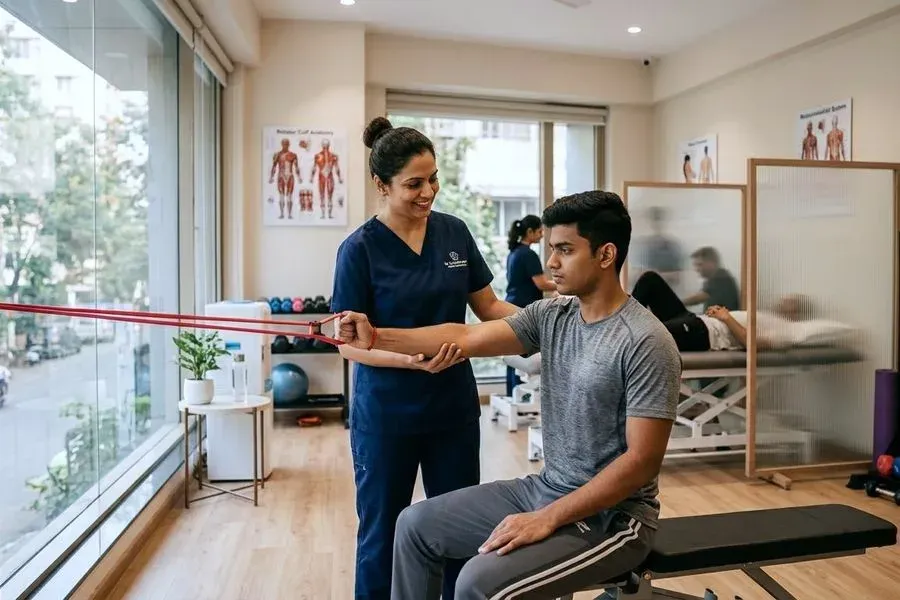
Should a physio website promise recovery times?
Physiotherapy has a credibility problem in general practice, and it is not the profession’s fault. Patients arrive half-expecting an open-ended commitment.
The answer is not to promise speed. It is to publish a realistic range for each condition, six to ten sessions over five weeks, say, and to explain what puts a patient at each end of it. Age, how long they waited, whether there is a surgical history, how much of the home programme they actually do.
A clinic that says this openly reads as more confident than one that says nothing, not less.
How do physiotherapy referrals reach you?
A good share of physiotherapy work arrives by referral, from an orthopaedic surgeon or a GP. That referral almost always gets searched before it gets called.
So the page a referred patient lands on matters as much as the one a cold searcher finds. If your surgeon says “go to this clinic for your knee rehab”, the patient searches your name plus “knee”, and what they find should be a page about post-surgical knee rehabilitation: not a homepage they have to navigate.
Can we see one of these before deciding?
Yes, on your own phone. We built a complete physiotherapy website and put it online for exactly this: a sample clinic organised by where it hurts, with a page for each of eight conditions, a page for each of six treatments, and every one of them linked to the others. The practice in it is invented, and its page says so at the top. The structure is the part that transfers.
We plan those landing points as part of local SEO groundwork, and keep the Google listing matched to them. What a clinic website actually needs sets out the page list in more detail, and local SEO for doctors and clinics explains why physiotherapy has the widest gap of any specialty between what the clinic sells and what the patient types. If you want to see the standard before committing to anything, start with a free written review.
We also work with
Dental clinics
Dental patients arrive in two states, in pain, or thinking about it for months. One website has to answer both.
Dermatology & cosmetic
A dermatology clinic serves two patients who want nothing to do with each other: one worried, one shopping. Keep their paths apart.
Ophthalmology
The person reading your cataract page is frequently not the patient. It is their son or daughter, comparing three hospitals on a phone.
Orthopaedics
Nobody books a knee replacement from the first website they read. Yours is usually the second or third, and it has to answer why you.
Paediatrics
Every other specialty is searched by the patient. Paediatrics is searched by a frightened parent, usually at night, asking whether to come now.
Multi-specialty
A multi-specialty hospital is eight practices sharing a building. Patients search for one of them, never for the building.
Gynaecology
A gynaecology patient often searches without telling anyone. The website has to answer her before she is willing to be seen enquiring.
ENT
An ENT practice serves a toddler with ear infections, an adult who cannot breathe through their nose, and a family buying a hearing aid.
Cardiology
Most cardiology searching happens in the two days after a scare, and it is done by a son or a wife, not by the patient.
Mental health
Nobody books a first appointment from a website. They read it four times over three months, and then they book.
Diagnostic centres
A diagnostic centre has two customers who never meet: the doctor who refers, and the patient who pays and compares.