
Specialty · Dental clinics
Dental clinic websites, built for what patients search
Dental patients arrive in two states, in pain, or thinking about it for months. One website has to answer both.
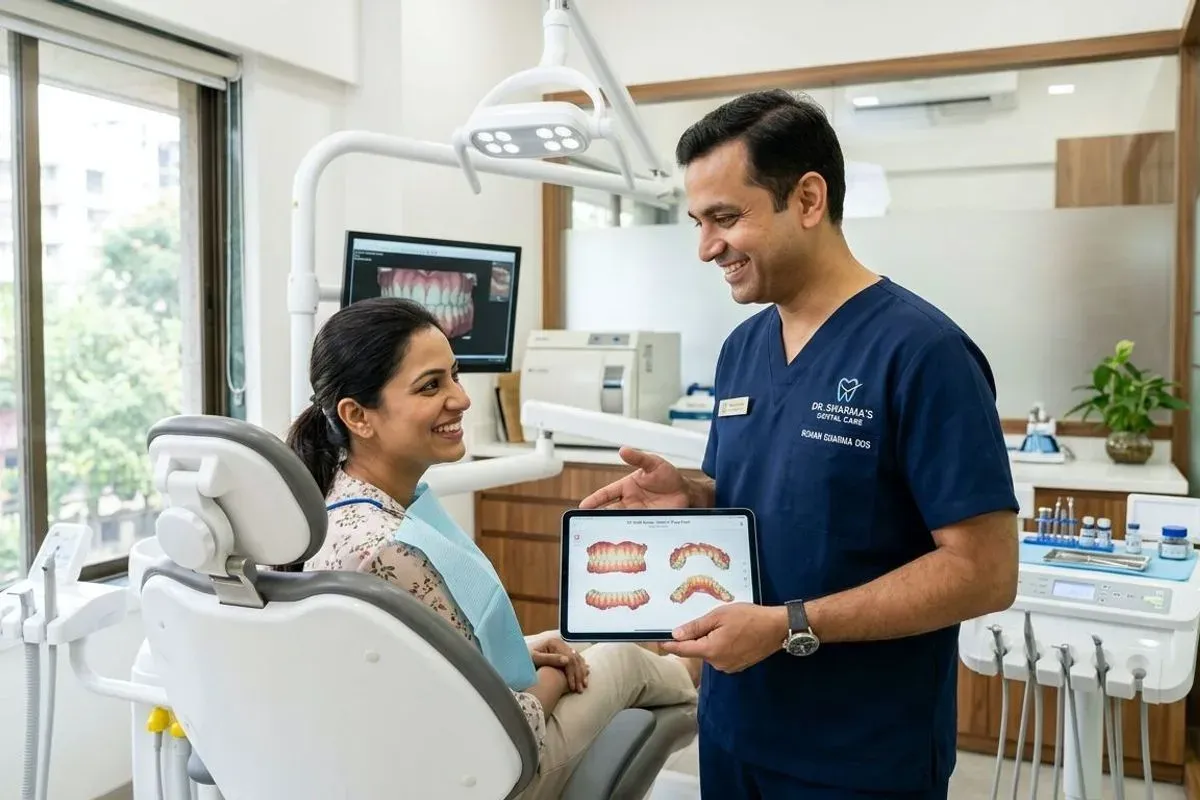
- pages that earn their place
- 6
- pages that earn their place
- listing categories that fit
- 5
- listing categories that fit
- searches written to
- 6
- searches written to
In the patient's words
What these patients actually type
Not the clinical name for it. These are the searches your pages have to be written to answer, in the words the patient used.
- tooth pain at night
- root canal cost
- dentist open now near me
- braces vs aligners
- teeth cleaning price
- broken tooth what to do
What is a dental patient doing when they find you?
Two people search for a dentist, and they are nothing alike.
The first has a broken tooth or an abscess, it is late, and they are in pain. They are on a phone, on mobile data, and they will look at three results at most. What they need to know is whether you are open, how far away you are, and whether they can reach a human. If your site takes six seconds to load, they are already at the next clinic.
The second has been thinking about aligners or implants for eight months. They are not in a hurry at all. They will read everything you publish, look at your before-and-after photographs, check your reviews, and think about it for another two weeks. What they need is enough detail to feel informed, and enough honesty to feel safe.
A dental website that only serves one of these loses the other.
Which pages does a dental clinic website need?
Dentistry is the specialty where a page per treatment matters most, because the treatments are priced so differently and worry about them so differently. A cleaning is a small decision. An implant is a large one, taken slowly.
Each treatment page answers what that patient came in with: what it costs, whether it hurts, how many visits, how long it lasts, and what happens if they wait. Written plainly, in the words patients use, “tooth pain”, not “irreversible pulpitis”.
What do most dental clinic websites get wrong?
The emergency path.
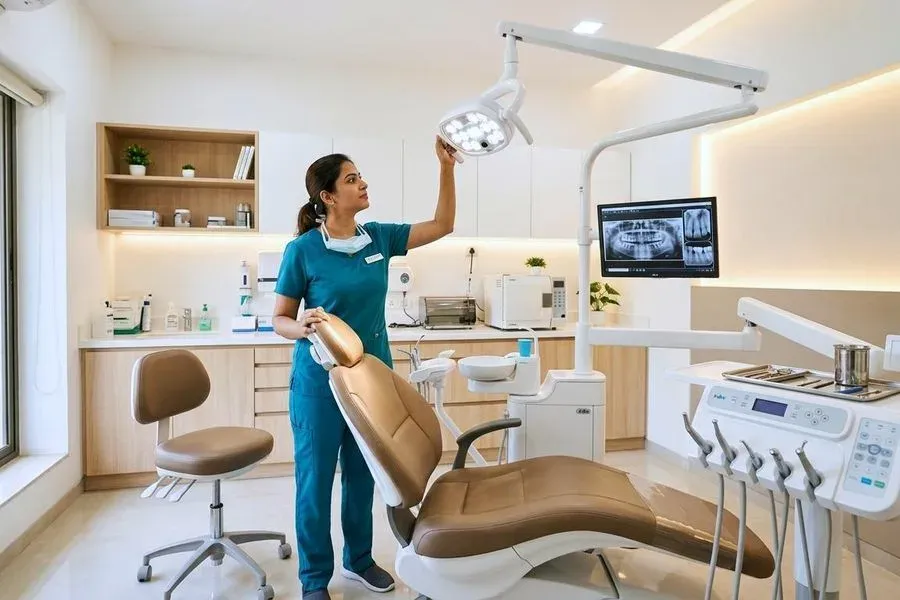
Most clinic websites treat urgent care as one line in a list. But an emergency patient is the most valuable visitor a dental practice gets, high intent, immediate, and usually the start of a long relationship, and they are also the least patient. They need your hours, your location and a way to message you within one tap of landing.
We build that path first and test it on a mid-range Android over mobile data, because that is the phone actually in their hand.
Does a dental clinic need a Google listing too?
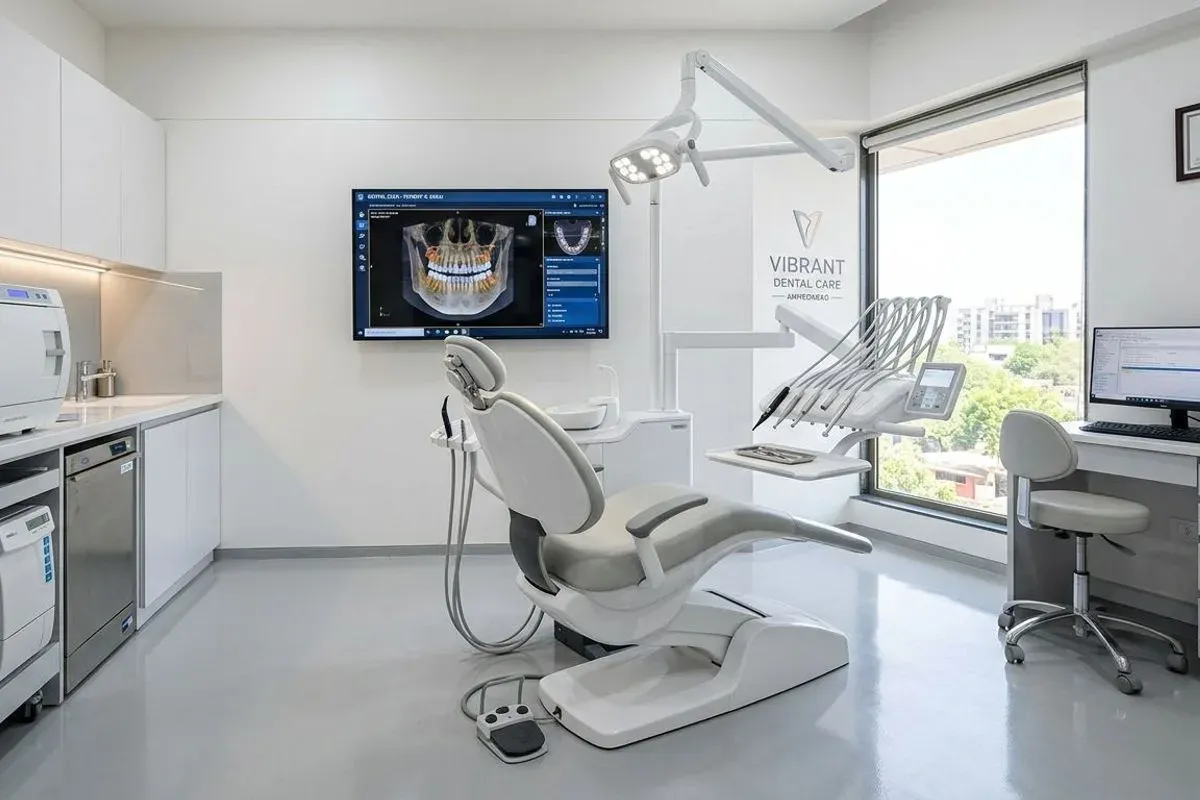
For dentistry more than most specialties, the Google Business Profile is the front door. The map results appear above everything else, and they are chosen on distance, hours, photographs and recent review activity, not on how good your website is.
That is why we handle both together. A listing that says you close at 7pm when you close at 9pm costs you the exact patient who needed you at 8. We keep the two matched, month after month, and reply to every review, drafted for you, never posted blind, and never confirming anything about anyone’s treatment.
Read more about Google Business Profile management and local SEO for clinics, or see what we built for a dental clinic in Mehsana. If you want the patient side of this first, how patients choose a clinic online walks through the whole decision, and local SEO for doctors and clinics sets out what dentistry needs that other specialties do not.
We also work with
Physiotherapy
Physiotherapy patients search a body part and a problem, not a specialty. Your website has to be found at that level.
Dermatology & cosmetic
A dermatology clinic serves two patients who want nothing to do with each other: one worried, one shopping. Keep their paths apart.
Ophthalmology
The person reading your cataract page is frequently not the patient. It is their son or daughter, comparing three hospitals on a phone.
Orthopaedics
Nobody books a knee replacement from the first website they read. Yours is usually the second or third, and it has to answer why you.
Paediatrics
Every other specialty is searched by the patient. Paediatrics is searched by a frightened parent, usually at night, asking whether to come now.
Multi-specialty
A multi-specialty hospital is eight practices sharing a building. Patients search for one of them, never for the building.
Gynaecology
A gynaecology patient often searches without telling anyone. The website has to answer her before she is willing to be seen enquiring.
ENT
An ENT practice serves a toddler with ear infections, an adult who cannot breathe through their nose, and a family buying a hearing aid.
Cardiology
Most cardiology searching happens in the two days after a scare, and it is done by a son or a wife, not by the patient.
Mental health
Nobody books a first appointment from a website. They read it four times over three months, and then they book.
Diagnostic centres
A diagnostic centre has two customers who never meet: the doctor who refers, and the patient who pays and compares.