
Guide for clinic owners
Social media for doctors: what to post, and how reels earn trust
What doctors should post, how to record a reel on your phone, consent and privacy, Gujarati captions, and what social media can and cannot do for a clinic.
14 October 2026 · 8 min read · CareInflow
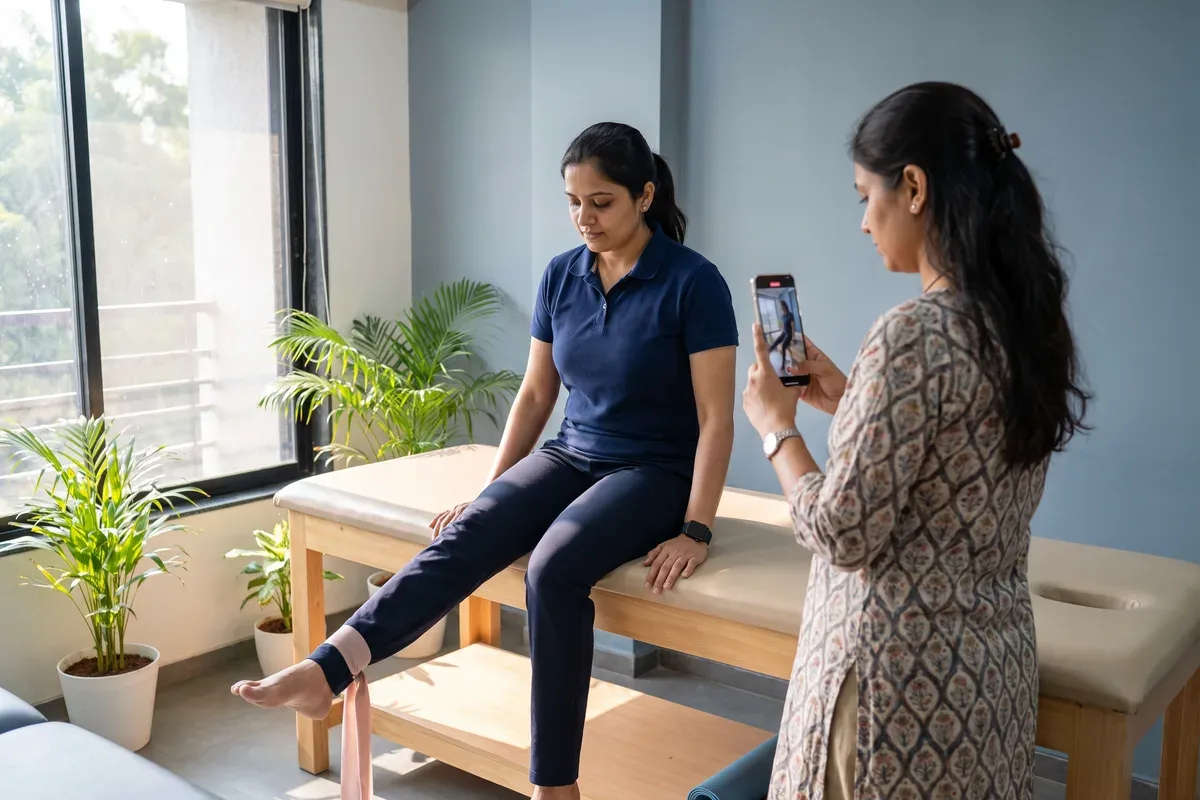
Patients now meet many doctors on their phone before they meet them in a clinic. Not through advertising: through the doctor who explained knee pain clearly, in Gujarati, in ninety seconds, and sounded like someone worth seeing.
That is the job a clinic’s social media can do well. It lets a patient hear how you think before they sit in front of you. This guide covers what to post, how to record it without a crew, what consent you need, and what social media cannot do, so you can decide whether it is worth your time.
What should a doctor post on social media?
Start with the questions patients already ask you in the chair. You answer them every week; on video, you answer them once and a patient can watch the answer at eleven at night, when they are deciding whether to come in.
Topics that work for most specialties:
- Questions you hear every week. “Is a root canal painful?” “When should back pain be seen by a doctor?” “Can I exercise after a knee injection?” One question, one video.
- What happens during a procedure. Step by step, how long it takes, what it feels like, and what recovery looks like. Fear of the unknown keeps more patients away than cost does.
- Myths you correct. The home remedy everyone’s aunt recommends, and what actually helps instead.
- Aftercare. The instructions patients forget on the way home, in a form they can save and watch again.
- Your clinic. The reception, the equipment, how to find the entrance, your timings and how to reach you. A patient who has seen the room is less anxious walking into it.
- Your team, with their consent: who will answer the phone, who will take the X-ray.
What to leave out: anything that promises a result, a patient’s face or details without written consent, discounts framed as “today only”, and claims you would not make in front of a colleague.
Posts, carousels or reels: which does what?
The three formats do different jobs, and most clinics need a mix.
A reel is a short vertical video. It is the format that carries your voice and manner, which is what a patient is really judging, so it does the heaviest lifting. Use it to explain one thing.
A carousel is a set of slides a patient swipes through. It suits a checklist or a step-by-step they will want to save: “five signs a child’s squint needs checking”, “what to bring to your first physiotherapy visit”.
A post is a single image with a caption. It is right for news a patient needs once: holiday timings, a new doctor joining, a camp date.
How do you record a reel in your clinic?
You do not need a camera crew. A phone from the last few years records better video than most clinics need. What makes a reel look professional is the setup, and it takes five minutes:
- Hold the phone upright, at eye level, on a small stand or a stack of books. Not in your hand.
- Face a window. Light in front of you is flattering; a bright window behind you turns you into a silhouette.
- Choose a quiet room. A small clip-on microphone does more for a reel than a better phone. Fans, traffic and reception chatter are what make a video feel amateur.
- Say the patient’s question first. “Many of you ask whether a root canal hurts.” The first sentence decides whether someone keeps watching.
- Speak the way you speak to patients. Thirty to ninety seconds is enough for most topics. Do not read a script word for word; a few points on a card is better.
- Record two or three takes and stop. Do not try to edit yourself on the phone between patients.
Editing is where a raw clip becomes something a patient can follow: trimming the pauses, adding captions (many people watch with the sound off, in a waiting room or on a bus), a simple graphic where a word needs one, a cover that says what the video is about, and an end card with your clinic’s name and how to reach you.
Gujarati or English?
Write in the language your patients speak and search in. In Mehsana and across North Gujarat that is often Gujarati, with the English medical words patients already use, like “X-ray” or “root canal”.
Gujarati captions also reach the people who often make the decision with the patient: parents, grandparents and the family member who books the appointment. Many clinics alternate, or post the same explainer twice, once in each language.
What about patient privacy and consent?
Healthcare content carries obligations that other businesses’ content does not. The ones we work to on every piece:
- Written consent before a patient appears in a video, is named, or has their case described in a way that could identify them.
- No clinical images without that consent, and nothing a patient would be uncomfortable seeing shared.
- No invented results. No claim that a treatment works for everyone, and no before-and-after picture without consent and honest context.
- The doctor approves every piece for medical accuracy before it is published. An editor can make a video clearer; only you can say whether it is correct.
Doctors also work under professional rules on advertising and patient testimonials. Check your medical council’s current guidance before you publish a patient’s story.
How often should a clinic post?
Consistency matters more than volume. Two reels a week, kept up for six months, does more for a clinic than a burst of daily posts that stops in the second month, because patients and the platform both notice a profile that went quiet.
The practical way to keep it up is to record in batches: four or five topics in one sitting every two weeks, edited and scheduled from there. That is one half-hour of your time a fortnight.
What can social media do for a clinic, and what can it not?
What it can do:
- Let patients hear you before they visit, which is the trust a reel builds and a brochure cannot.
- Answer common questions, so consultations start from understanding rather than worry.
- Make you recognisable in your own town, so your name is familiar when a patient later searches for a clinic.
What it cannot do:
- Guarantee followers, reach or new patients. Nobody can honestly promise those, and we do not.
- Replace a clear website and Google listing. A patient who likes your reel still checks your reviews, timings and directions before calling. How patients choose a clinic online walks through that checking.
Measure it by what reaches the clinic: questions in your messages that mention a video, patients at reception who say “I saw your reel”, saves and shares on the posts that explain something. Never buy followers; it inflates a number that means nothing and is visible to anyone who looks.
Where CareInflow fits
You record; we edit. You send your clips on WhatsApp, and we return a publish-ready reel: trimmed, captioned in Gujarati or English, with supporting graphics, a cover, an end card and the caption written. A standard reel is ₹699 and usually comes back in one to two working days.
Clinics that want a steady rhythm take a monthly package, from ₹5,499 a month, planned and produced as one monthly batch. Everything is on the pricing page, and what a single edit includes is set out on reel editing for doctors.
If you already have a clip on your phone, send it. We reply with what the edit would involve, the turnaround and the price. The reply is free; the editing is not, and there is no obligation. Start from healthcare content for doctors and clinics to see the rest.